Zap’n & Trim’n Yer Back 40!
Vision and LiDAR (Light Detection & Ranging)-based robotic lawnmowers emerged in the late 2010s as manufacturers adopted computer vision and laser mapping technologies from autonomous vehicles, eliminating both boundary wire installation and satellite-dependent RTK (Real-Time Kinematic) positioning systems that limited earlier robotic mower adoption.
These advanced systems use cameras, LiDAR sensors, and AI-powered object recognition to map yards, detect boundaries, and avoid obstacles through direct environmental perception rather than physical infrastructure or satellite signals.
Today, vision and LiDAR mowers include:
- Single-camera models
- Dual-camera stereo vision systems
- LiDAR-based mappers
- Hybrid vision-plus-LiDAR designs
- Remote-controlled units offering manual or semi-autonomous operation
Each addresses different yard complexities, lighting conditions, technology comfort levels, and autonomy preferences while avoiding wire installation and base station requirements.
Smooth Gardening’s LiDAR/Vision Lawnmower Picks:
Some links on this site are affiliate links. This means if you click and make a purchase, I may earn a commission at no extra cost to you. As an Amazon Associate, I earn from qualifying purchases. Thank you for your support!
1/4 Acre (10,890 sq. ft.)


1/3 Acre (14,375 sq. ft.)
1/2 Acre (21,780 sq. ft.)
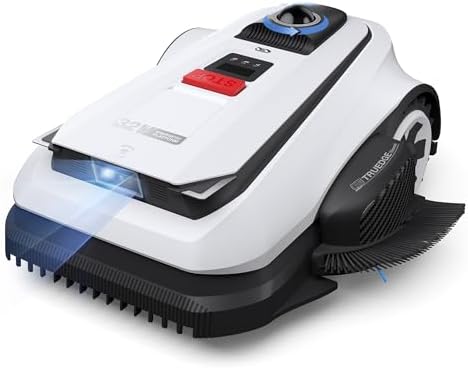
- Wire-Free Robotic Lawn Mower with LiDAR Navigation – GOAT A2000 LiDAR PRO is a wire-free robotic lawn mower that require…
3/4 Acre (32,670 sq. ft.)
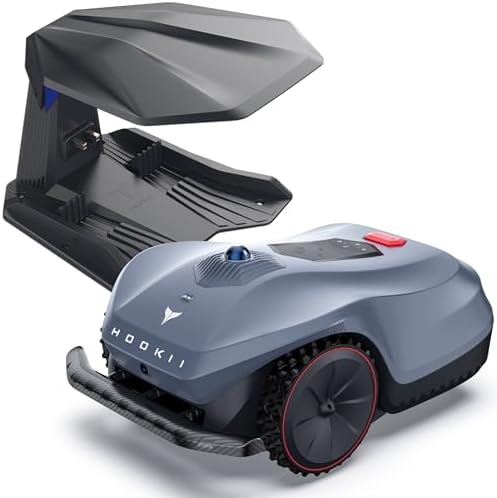
1 Acre (43,560 sq. ft.)
Remote Controlled

- 🔹 Conquers 85% Slopes with Wide-Tire 4WD Grip — Upgraded extra-wide tires boost traction and stability on wet, loose, or…
Key Features to Consider
Vision System Type
Consider the depth and breadth of onboard system functions before buying, including:.
- Single-camera vision (2D boundary detection)
- Dual-camera stereo vision (3D depth perception)
- LiDAR scanning (360-degree laser mapping)
- Hybrid camera-plus-LiDAR systems for navigation accuracy
Advantages & Disadvantages:
- Single cameras struggle with shadows and lighting changes
- Stereo vision provides depth perception for obstacle sizing
- LiDAR excels in any lighting but costs more
- Hybrid systems offer maximum reliability through sensor redundancy
AI Processing Power
Verify onboard processors handle real-time image processing, object classification, and path planning.
- Entry-level systems use basic pattern recognition identifying grass versus non-grass surfaces
- Advanced models employ neural networks adapting behavior in real time without external satellite or radio communication distinguishing between permanent boundaries (fences, walls) and temporary obstacles (toys, furniture, pets)
Boundary Recognition Method
- Visual boundary detection (recognizes edges, fences, hardscaping through cameras)
- Height differential sensing (detects lawn elevation changes via LiDAR or sensors)
- Multi-sensor fusion combining multiple detection methods
Take note:
- Visual detection works in well-defined yards with clear transitions
- Height sensing prevents cliff detection failures
- Combination of these two methods provides redundancy when single methods encounter challenging conditions
Obstacle Detection Range
Check detection distances of 1-6 feet depending on sensor types.
- LiDAR systems detect obstacles 3-6 feet ahead allowing gradual speed reduction
- Camera-only systems typically see 1-3 feet ahead requiring sharper direction changes
Longer detection ranges enable smoother navigation and reduce collision risk with approaching objects—critical advantage over bump-sensor wire systems that react only upon contact.
Coverage Capacity and Efficiency
Verify the rated lawn area (1/4 acre to 1+ acre) matches your property size.
Vision-guided systems achieve 85-95% coverage efficiency through systematic grid patterns learned from environmental perception, comparable to wire-based models and superior to random-pattern navigation, without requiring any installed infrastructure or satellite visibility.
Object Recognition Capability
Compare basic obstacle avoidance (stops or redirects when encountering objects) versus intelligent object classification (identifies specific objects like garden hoses, sprinklers, toys, pets and adapts behavior).
Advanced recognition enables operation in active yards without removing all objects, while basic systems require cleared lawns—both operating independently of wires or satellite signals.
Weather and Lighting Adaptability
Check performance specifications for various lighting conditions—dawn/dusk operation, overcast days, direct sunlight, and shadows.
- Camera systems struggle with extreme lighting contrasts and low light requiring midday operation
- LiDAR operates identically in all lighting conditions enabling reliable 24-hour scheduling
Rain sensors prevent operation during precipitation protecting electronics and preventing slippery-surface navigation errors
Learning and Mapping Speed
Verify initial mapping time ranges from 20 minutes for camera-based boundary walks to 90 minutes for comprehensive LiDAR yard scans.
- Systems learn yard layouts, identify permanent obstacles, and optimize routes through repeated sessions or single comprehensive mapping passes
- Some models require 3-5 mowing cycles for full optimization, while advanced systems achieve 90% efficiency after initial training
All mapping is accomplished through onboard sensing without external infrastructure.
Remote Control and Override Options
Look for smartphone app control, physical remote controllers, or manual steering wheels enabling user intervention.
Remote operation allows:
- Spot mowing
- Assisted boundary definition during initial setup
- Manual navigation through challenging areas when autonomous mode struggles
These types of troubleshooting are usually unavailable to wire-restricted or satellite-dependent systems.
Software Updates and Adaptability
Verify over-the-air (OTA) firmware updates improve navigation algorithms, add features, and fix issues without manufacturer service visits.
Regular software improvements extend useful lifespan 3-5 years beyond hardware capabilities as AI models improve through cloud-based learning from thousands of mowers operating in diverse real-world conditions.
Special Considerations
Yard Preparation and Visual Clarity
Vision-based systems require clear visual boundaries for reliable operation—advantage over wire systems that work regardless of visual clarity but disadvantage compared to wire systems in ambiguous edge conditions.
- Yards with indistinct edges where grass gradually fades into adjacent properties, poorly defined bed borders, or similar ground cover colors cause boundary confusion
- Before purchase, assess whether lawn edges are visually distinct—sharp transitions to concrete, mulch, or hardscaping work best
- Consider installing visual boundaries (landscape edging, decorative borders) in ambiguous zones
- LiDAR systems handle ambiguous visual transitions better through height detection while maintaining wire-free and satellite-free operation
Unlike RTK systems requiring perfect base station positioning, vision systems tolerate gradual environmental changes adapting through continuous learning.
Lighting Conditions and Operation Times
Camera-only based systems operate best during midday hours (10 AM – 4 PM) when lighting is consistent and shadows minimal—limitations not present in wire or RTK systems but offset by zero infrastructure requirements.
- Dawn and dusk operation challenges camera exposure—rapidly changing light levels cause boundary detection errors
- Properties with heavy tree canopy creating dappled sunlight show 20-30% more navigation errors than open lawns
- LiDAR systems eliminate lighting concerns enabling reliable 24-hour operation like wire systems but without installation requirements.
Schedule camera-based mowers for mid-morning to early afternoon matching optimal lighting, accepting this constraint as trade-off for infrastructure elimination.
Software Updates and Long-Term Performance
Vision and LiDAR mowers improve significantly through software updates as manufacturers refine AI algorithms using data from thousands of deployed units—advantage over static wire systems and RTK systems dependent on satellite constellation maintenance.
- Early buyers may experience navigation quirks resolved through updates within 3-6 months of release
- Subscribe to manufacturer update notifications and install firmware promptly—some updates improve coverage efficiency by 10-15% through better path planning
- Unlike wire systems with fixed performance or RTK systems requiring base station firmware coordination, vision-based mowers gain features years after purchase through AI improvements
However, this software dependence means discontinued models may lose support becoming obsolete despite functional hardware—consideration not affecting simple wire systems.
Connectivity Requirements and Network Dependencies
Vision and LiDAR systems require varying levels of internet connectivity affecting reliability and functionality.
- Entry-level models operate autonomously without WiFi but lose smartphone control, scheduling flexibility, and firmware updates—limiting convenience while maintaining independence
- Mid-range systems require intermittent connectivity for schedule changes and updates but continue mowing during internet outages using cached maps and schedules
- Premium models with cloud-based AI processing may require constant connectivity for real-time object recognition and path optimization—losing advanced features during outages while maintaining basic obstacle avoidance through onboard sensors
Assess your property’s WiFi coverage extending to lawn areas—mowers near property edges (100+ feet from routers) may experience dropped connections.
- Outdoor WiFi extenders ($40-120) resolve coverage issues.
- Consider cellular-enabled models ($50-100 annually for data plans) for properties with poor WiFi coverage or users wanting remote monitoring from anywhere.
- Unlike wire systems operating independently or RTK requiring only mower-to-base station communication, vision systems’ cloud connectivity enables continuous improvement through AI training but creates vulnerability to internet service disruptions.
Evaluate whether advanced features justify connectivity requirements—basic models without cloud dependence may suit users prioritizing reliability over cutting-edge object recognition, while tech-savvy users benefit from cloud-enhanced intelligence and remote control capabilities available nowhere else.
Insurance Coverage and Liability Considerations
Homeowner insurance policies vary significantly in coverage for robotic lawn equipment, with vision-based systems facing different considerations than wire-based models.
- Standard policies typically cover theft and damage under personal property provisions with $500-1,000 deductibles, but coverage specifics matter.
- Vision and LiDAR mowers with advanced obstacle detection may qualify for lower liability premiums versus wire-based bump-sensor models that react only after contact—insurers recognize reduced property damage risk.
- However, some insurers classify vision systems as “experimental technology” requiring riders or additional premiums ($50-150 annually).
- Verify coverage before purchase:
- Does your policy cover the full replacement value ($1,200-5,500)?
- Are software failures covered?
- Is damage to landscaping from navigation errors included?
- Does liability coverage extend to third-party property if the mower enters a neighbor’s yard (vision systems occasionally misidentify boundaries; wire systems physically cannot cross).
- Document serial numbers, purchase receipts, and software versions for claims.
- Consider dedicated robotic mower insurance ($80-200 annually) covering theft, vandalism, and accidental damage beyond standard homeowner limits.
Vision systems’ GPS tracking features aid recovery and may reduce insurance costs, while their higher replacement values may increase premiums versus cheaper wire-based models.
Privacy and Data Collection
Vision-based mowers with cameras and internet connectivity collect yard images, usage patterns, and potentially identifiable data transmitted to manufacturer servers for AI training—concern absent in wire systems and minimal in RTK systems transmitting only position coordinates.
- Review privacy policies before purchase—some manufacturers store video footage, others process images locally discarding raw data after analysis
- Consider network security for WiFi-connected models and whether home security systems trigger when mowers appear on outdoor cameras
- Users uncomfortable with data collection should choose LiDAR-only systems capturing geometric data without images, or stick with wire-based systems offering complete data privacy
The vision system advantage of intelligent obstacle recognition requires cloud-based AI training creating privacy trade-offs.
Pet and Wildlife Safety Improvements
Vision-based systems with object recognition detect and avoid pets, wildlife, and children significantly better than wire-based bump-sensor mowers that react only after contact—major safety advantage justifying technology complexity.
- Advanced models identify animals from 3-6 feet away, slowing or stopping entirely until paths clear
- RTK systems with satellite positioning alone provide no obstacle awareness requiring separate sensor integration
- No system guarantees 100% detection—fast-moving small animals may enter cutting zones between detection cycles
- Never operate autonomous mowers in yards with unsupervised small pets (under 10 pounds), ground-nesting birds during spring, or areas where children play without adult supervision
- Remote-controlled systems provide superior safety through constant human oversight while maintaining wire-free operation.
Rental Properties and Temporary Installations
Vision and LiDAR systems prove ideal for rental properties, vacation homes, and situations where permanent infrastructure installation is prohibited or impractical.
- Renters can use vision systems without landlord permission for wire installation or base station mounting
- Seasonal property owners can deploy and remove mowers within single days versus dedicating weekends to wire installation only to abandon infrastructure when selling
- HOA restrictions preventing visible base station installations don’t affect vision systems
This portability advantage over both wire and RTK systems expands robotic mowing accessibility to millions of users in temporary housing or restricted communities.
Advantages of LiDAR/Vision Lawnmowers
| Over Wired Based Systems | Over RTK-GPS Systems (Real-Time Kinematic) | Over VSLAM Systems (Visual Simultaneous Localization And Mapping) |
| LiDAR eliminates 4-12 hours of weekend-long wire installation labor. | LiDAR does not have base station installation or antennae maintenance required. | LiDAR operates identically in complete darkness, direct sunlight, dawn, dusk, and all lighting conditions between. |
| LiDAR does not have wire breaks from edging, gardening, animals, or frost. | LiDAR works under heavy tree canopy that blocks satellite signals. | LiDAR maintains full operational accuracy during fog, mist, and light rain conditions that severely impair camera-based VSLAM systems. |
| LiDAR does not have wire troubleshooting with multimeters when system fails. | LiDAR is reliable in urban environments with tall buildings. | LiDAR provides 1-2 centimeter positioning accuracy through direct distance measurement via laser pulse timing. VSLAM achieves 5-15 centimeter accuracy. |
| LiDAR has instant boundary changes (minutes vs. hours of wire relocation). | LiDAR operates in valleys and terrain with satellite signal blockage. | LiDAR completes comprehensive yard mapping in 45-90 minutes through systematic 360-degree scanning capturing complete environmental geometry in single passes. VSLAM requires 3-5 mowing sessions. |
| LiDAR has superior portability (20-90 min setup vs. 4-12 hours per property). | LiDAR does not have base station repositioning concerns (moving a base station just a few inches = full remap). | LiDAR maintains identical navigation accuracy through seasonal changes. VSLAM systems experience 15-25% accuracy decline during seasonal transitions. |
| LiDAR has active obstacle detection vs. post-contact bump sensors. | LiDAR eliminates radio link troubleshooting between mower and base station. | LiDAR navigation accuracy never degrades over time—laser distance measurement remains consistent indefinitely. VSLAM landmark databases can become corrupted or outdated as visual features change. |
| LiDAR adapts to temporary obstacles without removing them. | LiDAR does not have satellite constellation dependency or outages. | LiDAR sensors detect boundaries and obstacles 15-30 feet away providing extensive advance warning for path planning. VSLAM effective range typically spans 8-15 feet limited by camera focal length and resolution. |
| LiDAR has no visible infrastructure maintaining aesthetic appearance. | LiDAR has lower complexity (no base station power, mounting, calibration). | LiDAR navigation requires straightforward distance calculations comparing current scans to stored maps—computationally efficient processing consuming 30-40% less battery power than VSLAM. |
| LiDAR works in rental properties without landlord permission. | LiDAR is better for properties with limited sky visibility. | LiDAR captures only geometric point cloud data (distances and angles) without images—completely anonymous data. VSLAM systems continuously capture camera images. |
| LiDAR is suitable for HOA-restricted communities. | LiDAR eliminates base station weather protection requirements. | LiDAR has fewer failure modes—spinning laser emitter and receiver constitute the primary mechanical components. VSLAM requires cameras, image processors, feature extraction algorithms, landmark databases, and complex AI models. |
| LiDAR does not have abandoned wire infrastructure when moving. | LiDAR does not have base station coverage radius limitations. | LiDAR enables reliable 24-hour operation including complete darkness when VSLAM cameras cannot function. |
| LiDAR has portability without base station reinstallation at new properties. | LiDAR sensors require only occasional window cleaning (monthly) to maintain performance. VSLAM systems need multiple camera lenses cleaned, image quality monitoring, landmark database verification, and periodic remapping. |
Pros & Cons Common to All LiDAR/Vision Lawnmowers
| Pros | Cons |
| Zero infrastructure installation (immediate deployment) | Higher cost than wire systems ($1,200 – $5,500 vs. $600 – $2,000) |
| No ongoing wire or base station maintenance | Camera systems limited by lighting conditions (LiDAR exceeds) |
| Superior portability between properties (20-90 minute setup) | Requires clear visual boundaries for camera systems |
| Instant boundary modifications (minutes vs. hours) | Software dependence creates potential obsolescence |
| Active environmental perception vs. passive navigation | Privacy concerns from camera data collection |
| Intelligent obstacle recognition in advanced models | More complex electronics than simple wire systems |
| Continuous software improvements through OTA updates | Camera/sensor cleaning maintenance required |
| Works in rental properties and restricted communities | May struggle with ambiguous yard edges (wires work anywhere) |
| No visible infrastructure maintaining aesthetics | Dependence on manufacturer software support |
| Adapts to temporary obstacles without clearing yard | AI limitations in unusual scenarios |
| Environmental independence (no wires, satellites, base stations) | Higher repair costs than simple wire systems |
System Types and Configurations
Single-Camera Vision Systems
Single-camera systems use forward-facing cameras (720p-1080p resolution) analyzing image data to distinguish grass from non-grass surfaces, detecting boundaries where grass ends and driveways, mulch, or hardscaping begin.
- The camera captures 30-60 frames per second processed by onboard AI identifying edges, obstacles, and mowing zones.
- Setup requires walking the yard perimeter once while the mower follows learning boundaries, typically completing in 20-45 minutes with zero physical installation.
- These systems work best in well-defined yards with clear visual transitions—crisp lawn edges against concrete, pavers, or gravel
- Performance degrades in yards with gradual grass-to-dirt transitions, heavy shade causing exposure challenges, or similar-colored surfaces (grass adjacent to green groundcover)
- Cost ranges $1,200-2,200
- Best for suburban lots with traditional landscaping, users wanting wire-free convenience at moderate cost, and yards under 1/2 acre with distinct boundaries
- Unlike wire systems requiring perimeter installation and RTK needing base stations, camera systems begin operating immediately after brief training
Limitations include reduced performance in low light (dawn/dusk operation limited), confusion from heavy leaf litter obscuring grass, and occasional boundary drift requiring retraining after 15-20 mowing sessions.
Stereo Vision (Dual-Camera) Systems
Stereo vision systems employ two cameras spaced 4-8 inches apart creating depth perception through triangulation, enabling 3D understanding of yard layout without satellites or wires.
- The dual cameras calculate distances to objects, distinguish between flat obstacles (shadows) and physical objects (lawn furniture), and detect elevation changes (steps, curbs, slopes)
- Processing power requirements double versus single-camera systems but dramatically improve obstacle avoidance—stereo systems detect objects 2-4 feet ahead versus 1-2 feet for single cameras and avoid the post-contact reaction of wire-system bump sensors
- Setup time ranges 30-60 minutes for initial boundary learning with zero infrastructure
- Cost ranges $1,800-$3,000
- Works well in yards up to 3/4 acre with complex layouts
- Best for yards with varied terrain, users prioritizing safety around pets and children, and properties with numerous temporary obstacles (sports equipment, patio furniture)
- Stereo systems handle challenging lighting better than single cameras through depth data validation but still struggle in complete darkness or direct glare conditions
The dual-camera approach eliminates wire maintenance concerns and base station dependencies while providing superior obstacle awareness.
LiDAR-Based Mapping Systems
LiDAR systems use rotating laser sensors creating 360-degree scans measuring distances to objects through laser pulse reflection time, operating completely independently of wires, base stations, or satellite signals.
- The sensors generate precise 3D point cloud maps with 1-2cm accuracy, operating identically in any lighting from complete darkness to bright sunlight—solving the key limitation of camera systems
- LiDAR excels at detecting small obstacles (garden stakes, sprinkler heads, small toys) missed by cameras and bump sensors, creating permanent maps requiring minimal relearning
- Setup involves a single slow-speed mapping pass covering the entire yard (45-90 minutes depending on size), after which the system maintains consistent boundaries indefinitely without infrastructure
- Cost ranges $2,500-4,500
- Best for large properties (3/4 to 1+ acre), yards with poor lighting conditions or heavy tree canopy blocking satellites, and users wanting maximum reliability regardless of environmental conditions
- LiDAR systems handle rain, fog, and dust better than cameras while avoiding satellite dependency
Limitations include higher cost, slightly larger form factor accommodating spinning laser assembly, and occasional confusion from tall grass or weeds exceeding expected height profiles.
Hybrid Vision-Plus-LiDAR Systems
Hybrid systems combine cameras for texture and color recognition with LiDAR for precise distance measurement and obstacle detection, providing redundant navigation through multiple independent sensors—eliminating single points of failure inherent in wire breaks or RTK base station issues.
- Cameras identify grass type, detect visual boundaries and assess surface conditions (wet, dry, recently mowed)
- LiDAR handles precise positioning, obstacle avoidance, and mapping
- The dual-sensor approach continues operation when one system encounters challenging conditions—cameras work when LiDAR faces reflective surfaces, LiDAR operates when cameras encounter poor lighting
- No wires to break, no base stations to maintain, no satellites required
- Setup time ranges 30-75 minutes with both systems learning simultaneously through autonomous mapping
- Cost ranges $3,200-$5,500 for premium hybrid models.
- Best for professional-grade performance, large complex properties, and users wanting absolute maximum reliability and safety through sensor diversity.
- Hybrid systems achieve 95%+ coverage efficiency and lowest collision rates while operating in any environment regardless of satellite visibility or infrastructure availability
This is the most expensive option, but provides best overall performance, environmental adaptability, and future-proofing as manufacturers improve AI algorithms leveraging both data streams.
Remote-Controlled Semi-Autonomous Systems
Remote-controlled systems offer manual operation via physical controllers or smartphone apps with optional autonomous modes for basic coverage, operating without wires, base stations, or satellite dependencies.
- Users drive the mower establishing boundaries, navigate around obstacles, and control cutting in real-time, similar to RC vehicles
- Many models include assisted autonomy where the mower maintains straight lines or follows user-defined paths while the operator handles turning and boundary decisions using camera feeds or direct line of sight
- Setup requires no learning period, no wire installation, no base station calibration—users begin mowing immediately through direct control
- Cost ranges $800-2,000 depending on autonomy features
- Best for users wanting control over mowing patterns, yards with frequent layout changes (temporary gardens, seasonal decorations), those uncomfortable with full automation, and properties where infrastructure installation is prohibited (rentals, HOA restrictions)
- Provides backup control when autonomous modes fail or encounter confusing scenarios
- Eliminates wire trenching and RTK base station requirements while maintaining full user control
- Eliminates physical pushing effort and enables mowing for mobility-limited users who can operate controllers
Limitations include time requirements similar to push mowing (30-90 minutes depending on yard size), though users can operate from chairs or shaded areas rather than walking behind mowers.
Recommendations’ Once-Overs:
1/4 Acre
$
- Wireless, RTK-Free Setup — AI-Assisted Auto-Mapping with 360° 3D LiDAR: With AI vision and 360° 3D LiDAR, LiDAX Ultra 1000 mower auto-maps your yard in 3D with centimeter accuracy—no wires or RTK stations needed, even in complex layouts, under dim or harsh light. Power on and mow anywhere with ease.
- Flawless Edge Precision — < 2inch with Movable Disc: With UltraTrim 1.0, the robot lawn mower cuts within 2inch of walls, hedges and raised edges. A movable disc covers gaps to minimize misses. For flush lawn-pavement edges, it rides on edges for clean, precise cuts.
- AI-Vision Powered 300+ Obstacle Avoidance: Powered by 3D point cloud data and advanced AI vision, the wireless mower detects and avoids over 300 types of lawn obstacles—from large outdoor furniture to small yard items. Continuous algorithm upgrades enhance recognition accuracy and safety, ensuring smooth, worry-free mowing for your family and pets.
- All-Terrain Capability: Handles 45% Slopes, 23.6″ Paths with Off-Road Wheels: The rear-wheel drive system and off-road wheels provide strong traction, climbing slopes up to 45% and overcoming obstacles up to 1.6″ high and pits, with ease. It also handles uneven terrain, challenging weather, and maintains lawn-friendly operation.
- Smart U-Shaped Mowing for Flawless Coverage: The mower mows every inch of your lawn using U-shaped path planning, ensuring even, precise cuts. When the battery runs low, the mower automatically returns to the charging station and resumes mowing exactly where it left off.
- Dual Maps & Up to 150 Managed Zones: Manage up to 2 independent maps—ideal for separate front and back yards or multiple properties. Set tailored mowing plans for each zone, saving time and removing the need for a second mower.
- Smart Height Adjustment 1.2inch–3.9inch, Fits All Needs: Adjust the cutting height directly from your MOVAhome App to match your ideal lawn style. With a simple tap, choose the perfect grass length—anywhere from 1.2″ to 3.9″—for a consistently neat and well-groomed finish.
- Anti-Theft Protection & TrueGuard Security: An intelligent security system that keeps your mower and garden safe day and night. It continuously monitors the surroundings, detects potential risks, and alerts you when needed. With a link module, anti-theft protection offers real-time tracking and instant alerts if it is moved beyond the mapped area.
- Worry-free After Service: The package includes LiDAX Ultra 2000 (with LED Lights)*1, Charging Tower*1, One Set of Blades (9 PCS), Power Supply*1, Screws*8, Cleaning Brush*1.We offer a 3-year warranty and 24/7 after-sales service.
$$
- Check Before Purchase: 0.3 acres (13,000 sq ft) max mapping area. For grass under 3.5″ and flat lawns (height difference under 1.2″). (Note: Not suitable for St. Augustine and dense Zoysia. Slope < 18°.)
- Hands-Free Auto Mapping: With precise positioning and distance measurement, E18 effectively maps your yard and plans the mowing path, which can be easily viewed on your smartphone. (Note: Subscribe to 4G data via the app for stable connectivity if yo…
- Precise Obstacle Avoidance: E18’s 3D perception system accurately detects obstacles, ensuring it avoids collisions in complex garden environments.
- Reliable Lawn Maintenance: E18 can achieve beautiful and uniform parallel cutting. Smart coverage detection system ensures no area is left uncut.
- Worry-Free Experience: E18 features GPS tracking to prevent theft. With easy app control and automatic recall during rainy or low-light conditions, it provides a seamless, worry-free experience.
$$$
- SELF-DRIVING-LEVEL NAVIGATION FOR REAL YARDS:Vision AI + 360° 3D LiDAR builds a detailed 3D map of your lawn and plans systematic mowing paths—so S4 navigates real-world obstacles and uneven spaces with less babysitting and more predictable results.
- COMPLEX-YARD SPECS YOU CAN FEEL (AND CHECK): Rated for up to 0.25 Acre / 1000 m², handles slopes up to 42% (22°), and navigates narrow passages down to 31.5 in (80 cm). Store up to 5 maps and manage up to 100 zones.
- WIRE-FREE SETUP + FULL CONTROL IN THE APP:No boundary wire required. Create virtual boundaries, set schedules, and adjust mowing behavior anytime. Supports AI auto mapping / manual mapping to match different yard layouts.
- PRO-LEVEL CUT FROM 20 YEARS OF LAWN & GARDEN EXPERIENCE:A floating cutting deck, 7-inch (≈18 cm) cutting width, 1.6–3.2 in height range, plus Edge Cutting / Ride-on Edge—engineered for a clean, even finish that looks intentional.
- WEATHER-READY + SAFETY BUILT IN:Rated IPX6 (mower) / IP67 (charger), with rain sensor, lift/tilt safety sensors, PIN code, and Night Mode—built for everyday use and peace of mind.
- HIGH-EFFICIENCY MAPPING & SYSTEMATIC MOWING:Powered by 3D LiDAR and AI, S4 autonomously maps up to 1,000㎡ in about 1 hour, generating real-time 3D yard models for precise planning. Its stripe-pattern mowing avoids random paths for a cleaner finish, supports L-shaped zone management, and maintains ≥100㎡/h working efficiency. Runs 90 minutes per full charge.
- CERTIFIED, WEATHER-READY, AND BACKED BY REAL SUPPORT:Certified cTUVus and FCC compliant. Rated IPX6 (mower) / IP67 (charger), includes rain and lift/tilt sensors, PIN code, and Night Mode. Backed by 2-year warranty and hotline support: 1-833-822-0146 (Mon–Sun 9AM–9PM EST), support@sunseekertech.com.
- AWARD-WINNING DESIGN & ENGINEERING EXCELLENCE:CES Innovation Awards 2026 Honoree (Home Appliances) — a third-party recognition for design & engineering excellence.
- FEATURED IN TOP TECH MEDIA FOR INNOVATION & USER APPEAL: Featured in The Gadget Flow’s “Best Products at CES 2026” editorial selection—highlighted for innovation, design, and user appeal.
1/3 Acre
$
- True Drop and Mow & Voice Control: Start mowing straight out of the box with this robot lawnmower. No boundary wires or antennas required. One-tap auto mapping enables fast setup, while Alexa and Google Home support hands-free voice control.
- Solid State LiDAR& Vision Dual Fusion: A high-resolution solid-state LiDAR pairs with onboard vision sensors for stable, satellite-free navigation. Works reliably day or night with 3D awareness.
- AI VisionFence & GeoSketch Precision: Detects 200+ obstacle types with 0.4 inch accuracy. Edit up to 20 mowing zones on a realistic, interactive map in the app. Cuts cleanly along fences and pathways via ride-on mode supported by EdgeSense.
- 45% Slope Performance with Adjustable Cutting: Built for demanding terrain, this robot mower features off-road wheels and Electronic Stability Control to handle slopes up to 45%. A 100W motor with a 6-blade disc offers a 7.1 in cutting width and adju…
- Smart Security & Advanced App Control: Features GPS, geo-fence, lift detection, and Apple Find My alerts for smarter protection. Auto-docks during extreme weather, and the in-app Doodle tool lets you design fun, custom mowing patterns.
$$
- 【3D LiDAR SLAM+Vision Fusion】Enables precise positioning and obstacle avoidance without network or satellite signals. Easily passes through passages as narrow as 2.53 ft (77cm). It remains unaffected by obstructions or poor lighting conditions, operating reliably under trees and even at night. No ne…
- 【0.37 Acre. Yes. Just One Mower】Thanks to powerful vision and spatial fusion technology, the mower can “understand” its surroundings like human eyes. It supports edge mapping of up to 0.37 acre (16,146 sq.ft / 1500㎡) and ensures consistently centimeter-accurate positioning. Users can customize multi…
- 【Intelligence in Every Inch】After tens of thousands of tests and algorithm iterations, our intelligent obstacle avoidance system—based on 360° laser and visual fusion—was born. With a powerful AI database, the mower detects objects as small as 5.9 inches (15 cm) high and 0.4 inches (1 cm) wide—like …
- 【Like Crossing Flat Land With Ease】Large front-wheel drive all-terrain wheels easily cross about 1.6 inches (4 cm)-high obstacles, delivering excellent obstacle-crossing performance. The 11 inches (280 mm)-wide floating deck adapts to uneven terrain and features an anti-clog barrier that effectively…
- 【Quietly Gets It Done】Superior to traditional RTK-based solutions, the 3D LiDAR+Vision system allows precise navigation even at night, under trees, or in rain and heavy clouds. Ultra-quiet operation lets it work almost unnoticed. The base station can be placed in a garage or indoors to prevent theft…
- 【Your Lawn. In Your Pocket】The mower supports 3 wireless controls – WiFi, Bluetooth, and 4G (1GB Free). You can manage your lawn anytime, anywhere. We offer 3 preset mowing modes and allow to customize your own. Use the app to create maps, check status, set schedules, define areas and no-go zones, p…
- 【Easy Maintenance】The mower is equipped with a high-capacity 13 Ah battery, delivering up to 2 hours of continuous operation on a single charge and covering an area of up to 0.17 acres (7,535 sq.ft / 700㎡). With an IPX5 waterproof rating, daily maintenance is simple—just rinse the chassis with a wat…
- 【Proven in the Market】Since 2023, the Neomow X series has rapidly become one of Kickstarter’s hottest crowdfunding projects, winning multiple international design and technology awards. Through continuous iterations, we successfully completed full delivery in April 2025, earning widespread recogniti…
1/2 Acre
- Wire-Free Robotic Lawn Mower with LiDAR Navigation – GOAT A2000 LiDAR PRO is a wire-free robotic lawn mower that requires no perimeter wire or RTK antenna. The HoloScope 360° Dual-LiDAR system automatically maps your yard and delivers precise 2 cm positioning — even under trees, near fences, or in shaded areas where GPS mowers lose signal.
- Built-In Edge Trimming for Clean Borders – Unlike standard robot lawn mowers, this model features an integrated TruEdge trimmer for true edge-to-edge cutting. It trims along driveways, sidewalks, flower beds, and irregular lawn borders — reducing the need for manual string trimming after mowing.
- High-Power 32V Platform for Thick Grass – Designed for American lawns with Bermuda, Zoysia, Fescue, and St. Augustine grass. The 32V motor and dual-blade disc system provide stronger cutting torque and faster blade rotation, helping this robotic mower handle dense, fast-growing grass and uneven terrain.*Compared to previous GOAT models, based on ECOVACS lab testing.
- Fast Charging Robotic Mower for Medium to Large Yards – Equipped with a durable 3.0Ah battery and 113.4W fast charging, this robot lawn mower recharges in about 50 minutes. Ideal for homeowners looking for automated lawn care with minimal downtime and consistent scheduled mowing performance.
- Smart App-Controlled Lawn Mower with Custom Zones – Control your smart lawn mower through the ECOVACS app. Create multiple mowing zones, set no-go areas, adjust cutting height and speed, define travel paths between zones, and customize mowing schedules. Designed for complex yard layouts and personalized lawn care.
- Advanced 3D Obstacle Detection for Safer Mowing – Powered by AI Vision and 3D ToF LiDAR, GOAT A2000 LiDAR PRO accurately identifies and navigates around more than 200 types of obstacles — from kids’ toys and patio furniture to pets and small wildlife. With detection precision down to 5 cm, it maintains safe clearance while mowing closely around objects, helping protect your lawn, landscaping, and loved ones.
3/4 Acre
$
- 3D LiDAR SLAM+Vision Fusion: Enables precise positioning and obstacle avoidance without network or satellite signals. Easily passes through passages as narrow as 2.53 ft (77cm). It remains unaffected by obstructions or poor lighting conditions, operating reliably under trees and even at night. No need to bury boundary wires or install RTK stations – ready to use right out of the box. Its simple operation makes it especially user-friendly for elderly users.
- 0.75 Acre. Yes. Just One Mower: Thanks to powerful vision and spatial fusion technology, the mower can “understand” its surroundings like human eyes. It supports edge mapping of up to 0.75 acre (32,670 sq.ft / 3000㎡) and ensures consistently centimeter-accurate positioning. Users can customize 40 working areas via the app and define no-go zones such as pools, flower beds, and play areas, all of which are accurately recognized. Daily lawn care becomes effortless with the schedule function.
- Intelligence in Every Inch: After tens of thousands of tests and algorithm iterations, our intelligent obstacle avoidance system—based on 360° laser and visual fusion—was born. With a powerful AI database, the mower detects objects as small as 5.9 inches (15 cm) high and 0.4 inches (1 cm) wide—like children, pets, or even a hedgehog—and safely avoids them. With positioning error under 0.8 inches (2 cm), it reduces missed lawn spots and achieves 95% coverage.
- Like Crossing Flat Land With Ease: Large front-wheel drive all-terrain wheels easily cross about 1.6 inches (4 cm)-high obstacles, delivering excellent obstacle-crossing performance. The 11 inches (280 mm)-wide floating deck adapts to uneven terrain and features an anti-clog barrier that effectively prevents grass clippings buildup. Adjustable cutting height from 1.2 to 3.3 inches (30 to 85 mm) allows effortless adaptation to various lawn conditions.
- Quietly Gets It Done: Superior to traditional RTK-based solutions, the 3D LiDAR+Vision system allows precise navigation even at night, under trees, or in rain and heavy clouds. Ultra-quiet operation lets it work almost unnoticed. The base station can be placed in a garage or indoors to prevent theft. After recharging, it resumes mowing right where it left off, thanks to breakpoint resume functionality.
- Your Lawn. In Your Pocket: The mower supports 3 wireless controls – WiFi, Bluetooth, and 4G (1GB Free). You can manage your lawn anytime, anywhere. We offer 3 preset mowing modes and allow to customize your own. Use the app to create maps, check status, set schedules, define areas and no-go zones, perform remote OTA, and more, providing full intelligent lawn care support.
- Easy Maintenance: The mower is equipped with a high-capacity 13 Ah battery, delivering up to 2 hours of continuous operation on a single charge and covering an area of up to 0.17 acres (7,535 sq.ft / 700㎡). With an IPX5 waterproof rating, daily maintenance is simple—just rinse the chassis with a water jet and wipe the surface with a dry towel.
$$
- Wire-Free Robotic Lawn Mower with Dual-LiDAR Navigation – GOAT A3000 LiDAR PRO is a wire-free robotic lawn mower that requires no perimeter wire or RTK antenna. The HoloScope 360° Dual-LiDAR system automatically maps your yard and maintains precise 2 cm positioning accuracy — even under trees, along fences, or in shaded areas where GPS-based mowers lose signal.
- Edge-to-Edge Cutting with Built-In TruEdge Trimmer – This robotic lawn mower features an integrated edge trimmer for clean borders along sidewalks, driveways, fences, and flower beds. Designed to reduce manual string trimming after mowing and deliver a consistent, finished lawn appearance.
- 32V High-Power System for Thick American Grass – Built to handle Bermuda, Zoysia, Fescue, and St. Augustine grass. The 32V high-performance platform and dual-blade disc system provide strong cutting torque and fast blade rotation, helping the mower cut through dense, fast-growing grass and uneven terrain.
- 7.5Ah Large-Capacity Battery with 189W Fast Charging – Engineered for medium to large yards, GOAT A3000 is equipped with a 7.5Ah high-capacity battery and 189W fast charging system. It fully recharges in approximately 70 minutes, allowing extended runtime and reduced downtime for efficient, scheduled lawn maintenance.
- Smart App-Controlled Lawn Care with Custom Zones – Manage your robotic lawn mower through the ECOVACS app. Edit maps, create multiple mowing zones, set no-go areas, adjust cutting height and speed, and define travel paths between zones. Ideal for complex yard layouts and personalized lawn care schedules.
- AI Vision & 3D LiDAR Smart Obstacle Avoidance – Equipped with AI Vision combined with 3D ToF LiDAR, GOAT A3000 LiDAR PRO intelligently detects and avoids over 200 types of obstacles — including pets, toys, garden décor, and even small wildlife like hedgehogs — with recognition accuracy down to 5 cm. This advanced sensing system maintains safe spacing while ensuring precise navigation and cleaner cuts around objects, reducing missed patches and accidental contact.
1 Acre
$
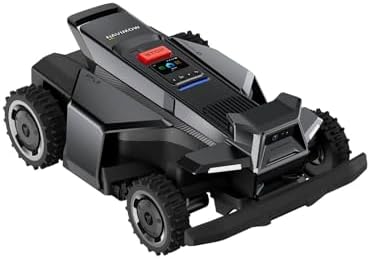
- Most Advanced All-Wheel Drive: This robot lawnmower features an ORV-tuned dual suspension system that powers through uneven terrain, climbs extreme 84% (40°) slopes, and crosses obstacles up to 2.8 in with confidence, ensuring stable and reliable performance on complex lawns.
- Turf-Safe Zero-Turn Steering: Unlike conventional systems, this lawn mower robot uses Xero-Turn AWD with eccentric front-wheel steering and smart traction control to prevent turf scuffing or tearing, delivering smooth zero-turn maneuvering without damaging grass.
- Ultra-Efficient MowMentum Cutting: Powered by dual 180W motors, this high-performance robot mower features dual cutting discs with 12 blades, a 17 in cutting width, and adaptive blade control to handle tall, dense grass efficiently while EdgeSense reduces trimming margins to under 2 in.
- Hands-Free Setup & Intelligent Control: One-tap Auto Mapping enables fast, wire-free setup with no antenna required. Edit maps with GeoSketch, track via GPS, and receive GeoFence or lift alerts, while voice control via Alexa or Google Home makes this one of the most intelligent robotic lawn mowers available.
- Elite Positioning & Obstacle Avoidance: EFLS tri-frequency Network RTK combined with 360° Vision and VIO ensures centimeter-level accuracy even under trees or along fences. AI-powered VisionFence identifies over 200 obstacle types, keeping the robot lawn mower operating safely and precisely.
$$

- 【3D LiDAR SLAM+Vision Fusion】Enables precise positioning and obstacle avoidance without network or satellite signals. Easily passes through passages as narrow as 2.53 ft (77cm). It remains unaffected by obstructions or poor lighting conditions, operating reliably under trees and even at night. No need to bury boundary wires or install RTK stations – ready to use right out of the box. Its simple operation makes it especially user-friendly for elderly users.
- 【1 Acre. Yes. Just One Mower】Thanks to powerful vision and spatial fusion technology, the mower can “understand” its surroundings like human eyes. It supports edge mapping of up to 1 acre (43,560 sq.ft / 4000㎡) and ensures consistently centimeter-accurate positioning. Users can customize multiple working areas via the app and define no-go zones such as pools, flower beds, and play areas, all of which are accurately recognized. Daily lawn care becomes effortless with the schedule function.
- 【Intelligence in Every Inch】After tens of thousands of tests and algorithm iterations, our intelligent obstacle avoidance system—based on 360° laser and visual fusion—was born. With a powerful AI database, the mower detects objects as small as 5.9 inches (15 cm) high and 0.4 inches (1 cm) wide—like children, pets, or even a hedgehog—and safely avoids them. With positioning error under 0.8 inches (2 cm), it reduces missed lawn spots and achieves 95% coverage.
- 【Like Crossing Flat Land With Ease】Large front-wheel drive all-terrain wheels easily cross about 1.6 inches (4 cm)-high obstacles, delivering excellent obstacle-crossing performance. The 11 inches (280 mm)-wide floating deck adapts to uneven terrain and features an anti-clog barrier that effectively prevents grass clippings buildup. Adjustable cutting height from 1.2 to 3.3 inches (30 to 85 mm) allows effortless adaptation to various lawn conditions.
- 【Quietly Gets It Done】Superior to traditional RTK-based solutions, the 3D LiDAR+Vision system allows precise navigation even at night, under trees, or in rain and heavy clouds. Ultra-quiet operation lets it work almost unnoticed. The base station can be placed in a garage or indoors to prevent theft. After recharging, it resumes mowing right where it left off, thanks to breakpoint resume functionality.
- 【Your Lawn. In Your Pocket】The mower supports 3 wireless controls – WiFi, Bluetooth, and 4G (1GB Free). You can manage your lawn anytime, anywhere. We offer 3 preset mowing modes and allow to customize your own. Use the app to create maps, check status, set schedules, define areas and no-go zones, perform remote OTA, and more, providing full intelligent lawn care support.
- 【Easy Maintenance】The mower is equipped with a high-capacity 13 Ah battery, delivering up to 2 hours of continuous operation on a single charge and covering an area of up to 0.17 acres (7,535 sq.ft / 700㎡). With an IPX5 waterproof rating, daily maintenance is simple—just rinse the chassis with a water jet and wipe the surface with a dry towel.
- 【Proven in the Market】Since 2023, the Neomow X series has rapidly become one of Kickstarter’s hottest crowdfunding projects, winning multiple international design and technology awards. Through continuous iterations, we successfully completed full delivery in April 2025, earning widespread recognition from customers in over 30 countries. We always provide fast, efficient, professional, and personalized service to help families worldwide enjoy their precious time.
Remote Controlled
- 🔹 Conquers 85% Slopes with Wide-Tire 4WD Grip — Upgraded extra-wide tires boost traction and stability on wet, loose, or uneven terrain. The Beast Quad 1000W Motors + FOC E-Brake deliver unstoppable 4WD torque to climb 85% slopes with zero tip-over risk — no pushing, no slipping, just pure control. Mow steep hillsides up to 300% faster than any walk-behind mower.
- 🔹 Gas-Mower Power: Cuts Thick, Thick, Wet Grass Perfectly — 21-inch reinforced steel deck + 1600W peak power slices through stubborn St. Augustine grass. Wind tunnel suction (84.4m/s) delivers clean, professional stripes – no ragged edges or missed patches.
- 🔹 2.25-Hour Runtime & 3X Longer Battery Life — 56V 18Ah automotive LiFePO4 battery covers 1.125 acres per charge. 600W Supercharger refuels in 180 mins – 3x battery lifespan than the industry average!
- 🔹 5-in-1 Multifunctional System (Attachments Sold Separately) — Upgrade with accessories: Auto-dump grass bag, snow plow, leaf vacuum, and trailer hitch. Replace $2,000+ of equipment – cut grass, clear snow, collect leaves, and haul debris year-round!
- 🔹 5ms Ultra-Low Latency Gaming Remote: Fun & Easy for All Ages — Lag-free control navigates under shrubs/ditches/trampolines. One-touch zero-turn + cruise control let seniors operate safely from shade – no bending or heat exposure.
- 🔹 5-Layer Safety Shield: Avoids Obstacles & Tipping — Ultrasonic sensors + tilt protection + e-stop detect pets/people instantly – critical for families with children/pets on slopes!
- 🔹 Military-Grade Durability: All-Aluminum Body & Tungsten Blades — High-strength frame + deep-drawn steel deck handles roots/rocks without damage – built for long-lasting performance.
Care and Maintenance
Vision System Maintenance
- Clean camera lenses weekly with microfiber cloth and lens cleaner
- Remove dust, pollen, and water spots affecting image clarity
- Inspect for scratches or damage to camera covers monthly
- Clean LiDAR sensor windows with approved cleaning solutions only
- Verify sensor housings remain clear of spider webs and insect nests
- Test vision system performance in various lighting conditions quarterly
- No wire circuit continuity testing required
- No RTK base station maintenance or antenna cleaning needed
Software and Firmware Updates
- Check for updates weekly during active mowing season
- Install updates promptly to receive navigation improvements
- Read release notes understanding changes before updating
- Backup mower settings before major firmware updates
- Report navigation issues to manufacturer for algorithm training
- Participate in beta programs if comfortable with experimental features
- Updates improve vision AI continuously unlike static wire systems
- No RTK base station firmware coordination required
Mapping and Boundary Verification
- Walk yard perimeter monthly verifying boundary accuracy
- Retrain boundaries after major landscaping changes
- Update maps when adding or removing permanent obstacles
- Monitor for boundary drift indicating need for relearning
- Save multiple map versions for seasonal layout changes
- Document boundary adjustments for future reference
- Remapping takes 20-90 minutes versus hours of wire relocation
- No RTK base station recalibration required after modifications
Physical Cleaning and Inspection
- Remove grass clippings from undercarriage after each mowing
- Brush debris from wheels and suspension components weekly
- Clean charging contacts preventing poor connections
- Inspect blade condition every 2-3 mowing sessions
- Check tire tread and wheel bearing smoothness monthly
- Wipe down exterior removing dirt and grass stains
- No boundary wire inspection or repair needed
- No RTK base station weatherproofing checks required
Blade Maintenance
- Replace blades every 1-3 months depending on lawn size and grass type
- Use manufacturer-specified blade types maintaining balance
- Carry spare blade sets for mid-season replacement ($15-40)
- Inspect blade mounting hardware for security
- Never operate with damaged or bent blades
- Balance blade assemblies if vibration develops
- Same blade maintenance as wire or RTK systems
Battery Care and Management
- Monitor battery health through app diagnostics
- Charge batteries in temperature-controlled environments (50-80°F)
- Avoid deep discharge below 20% capacity
- Store at 50-70% charge during extended non-use periods
- Replace batteries showing 30%+ capacity decline (typically 3-5 years)
- Keep charging dock clean and properly grounded
- Same battery care as wire or RTK systems
Seasonal Maintenance
- Deep clean entire mower at season end removing all debris
- Inspect all sensors, cameras, and mechanical components
- Update firmware before winter storage
- Remove battery storing separately in climate-controlled space
- Cover or store mower indoors protecting from temperature extremes
- Perform thorough inspection and testing before spring startup
- No wire system winterization or RTK base station protection required
Troubleshooting Navigation Issues
- Poor boundary detection: Clean cameras, verify lighting conditions, retrain boundaries
- Missed coverage areas: Increase mowing frequency, adjust path planning settings
- Frequent stops: Clear obstacles, lower obstacle detection sensitivity slightly
- Battery drain: Reduce cutting height, clean undercarriage, check wheel resistance
- Object recognition failures: Update firmware, report specific objects to manufacturer
- Mapping errors: Perform complete remapping session, clear saved maps and restart
- No wire break troubleshooting with multimeters required
- No RTK base station radio link diagnostics needed
Conclusion
Vision and LiDAR robotic lawnmowers eliminate 4-12 hours of boundary wire installation labor and avoid RTK base station setup requirements through onboard sensor-based navigation while delivering 85-95% coverage efficiency, that saves 30-90 minutes weekly.
Vision and LiDAR systems are valuable for homeowners prioritizing setup simplicity, yard flexibility, rental property compatibility, advanced safety, and anti-theft features.